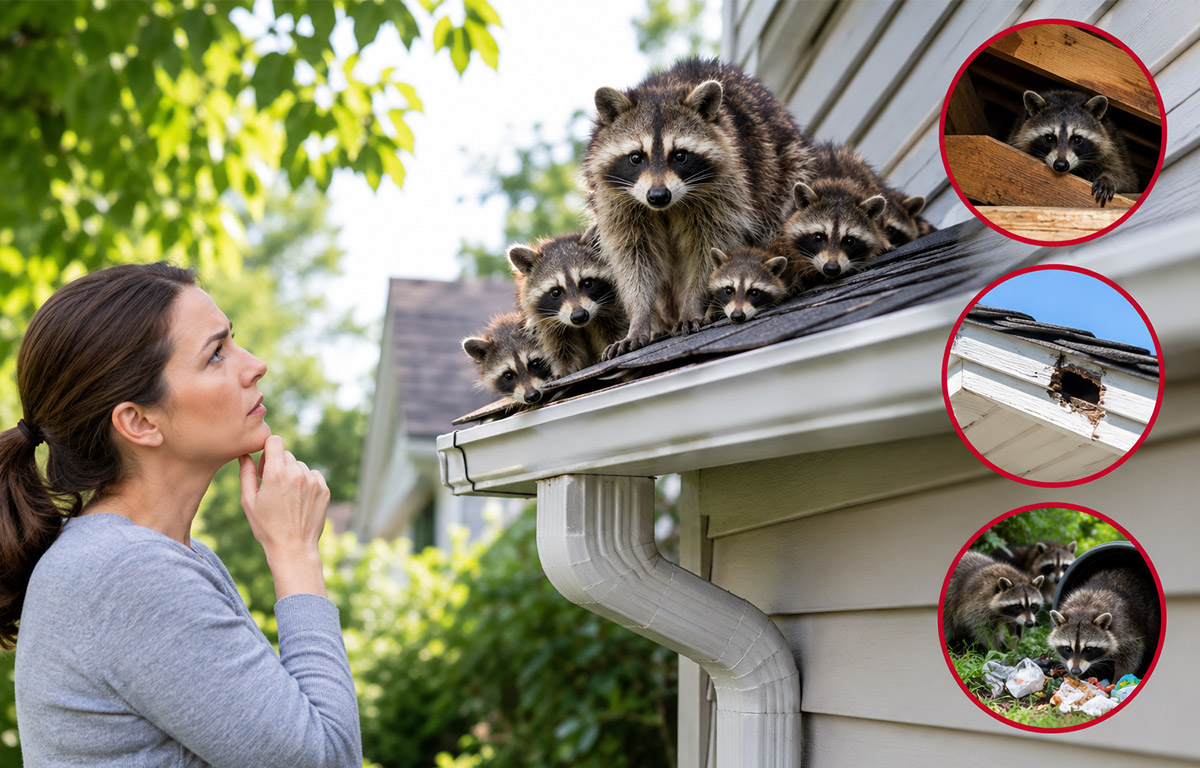
Every spring, Pestend’s Mississauga technicians see a seasonal jump in raccoon calls, and there’s a clear reason for it. Raccoon breeding season Mississauga homeowners deal with each year brings more nighttime activity, more attempts to get into attics and sheds, and more questions about what to do if a litter shows up on the property.
This guide covers when raccoons breed and have babies in Ontario, the signs to watch for around a Mississauga home, and why removing raccoons during breeding season calls for a different approach than removal at other times of year.
When Do Raccoons Have Babies in Ontario? The Breeding Timeline
Raccoon mating typically starts in January and can continue into early spring, sometimes with a second breeding window later on if an early litter doesn’t survive. Gestation runs about 63 to 65 days, and most litters of four or five kits are born between March and June, which is why the months following winter tend to bring the highest raccoon activity around Mississauga properties.
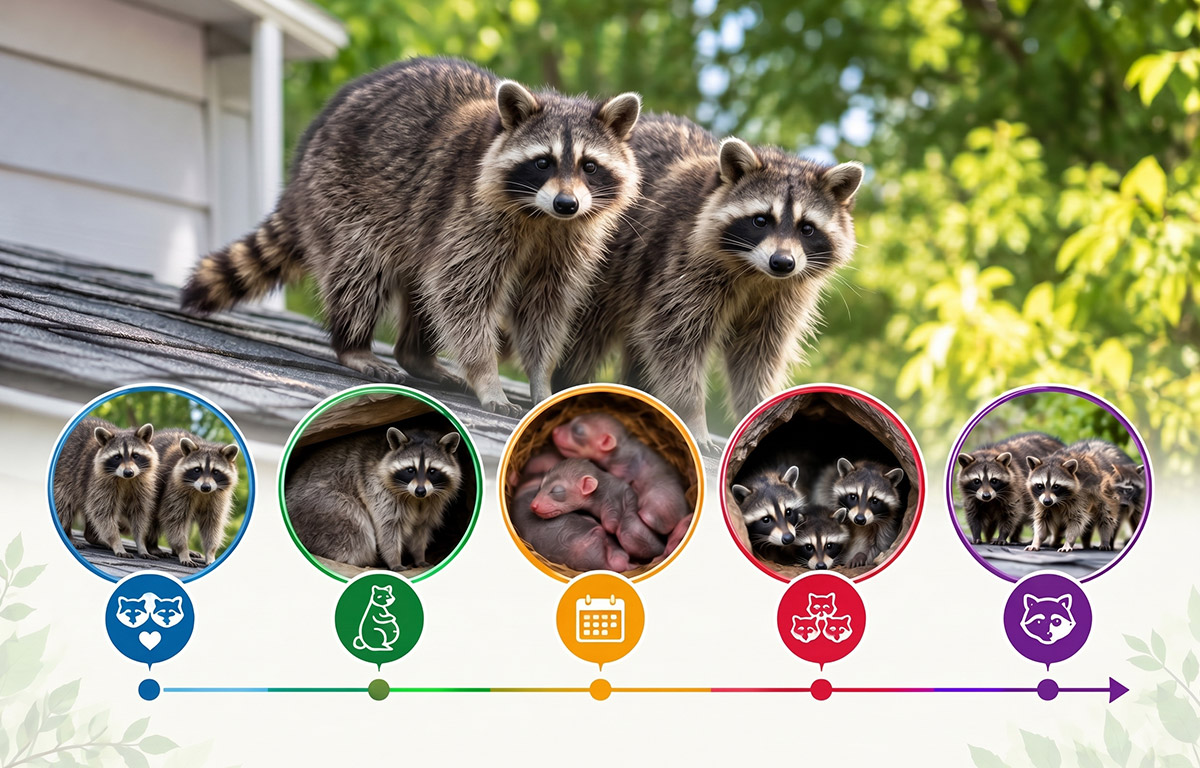
Kits usually stay in the den for roughly eight to ten weeks before they start following their mother outside, and they aren’t fully independent until later in the year.
Exact timing can shift from year to year depending on weather and food availability, so a raccoon problem in March isn’t necessarily on the same schedule as one in June. Understanding roughly when do raccoons have babies in Ontario helps explain why a raccoon found in an attic in April is far more likely to be a nursing mother than one found in October.
Raccoon Mating Season in Mississauga: Signs to Watch For
During raccoon mating season, Mississauga residents often notice more raccoon activity after dark: more noise on the roof or in the yard, vocalizations that can sound like screeching or chattering, and males ranging farther from their usual territory in search of a mate. Scent marking near sheds, decks, and chimneys tends to increase, and raccoons may become more visible in daylight simply because they’re covering more ground.
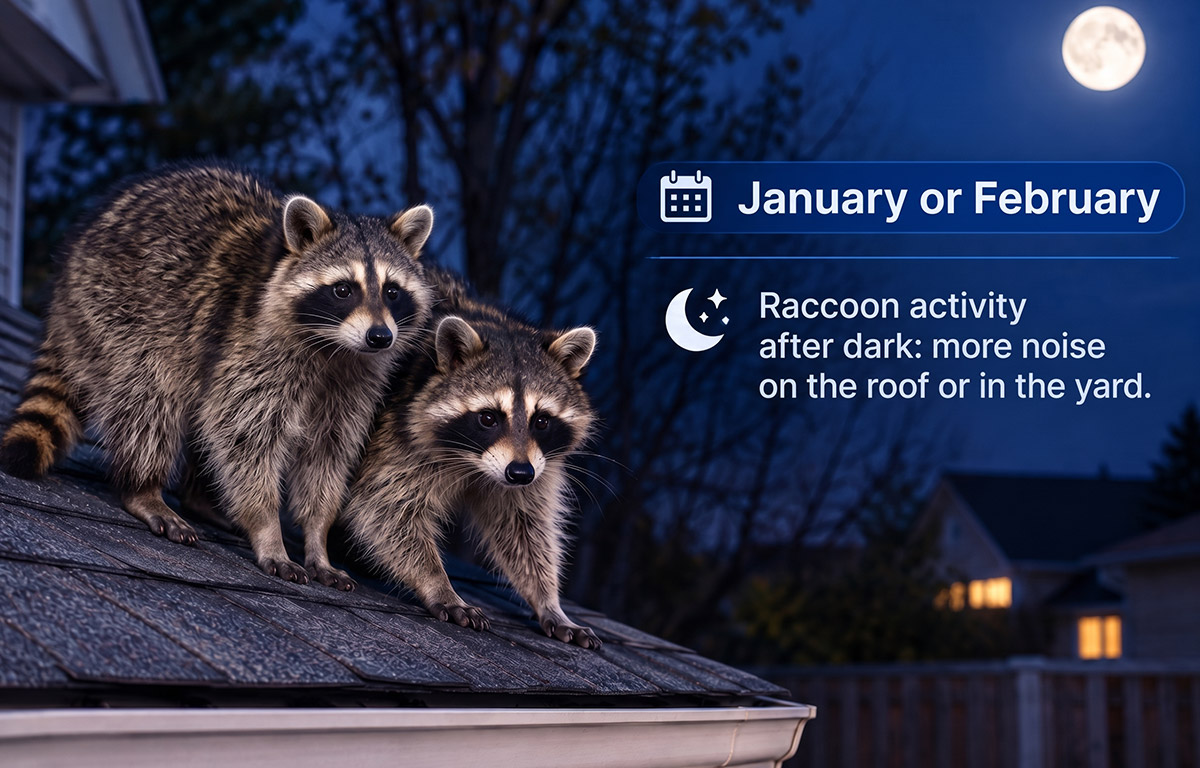
None of this on its own means an animal is aggressive or unwell. It does mean a raccoon exploring a property in January or February is more likely looking for a denning site than just passing through. If that search ends at a loose vent, a damaged soffit, or an open chimney cap, raccoon activity can turn into a denning problem within days.
Raccoon Baby Season Ontario: From Newborn Kits to Independence
Once kits are born, they’re blind, essentially helpless, and completely dependent on their mother for warmth, feeding, and protection. For the first several weeks they stay in the den, which on a residential property is often an attic, chimney, or shed rather than a hollow tree. By eight to ten weeks, kits start exploring near the den entrance, and by late summer they’re following their mother on regular foraging trips. Full independence generally doesn’t happen until fall.
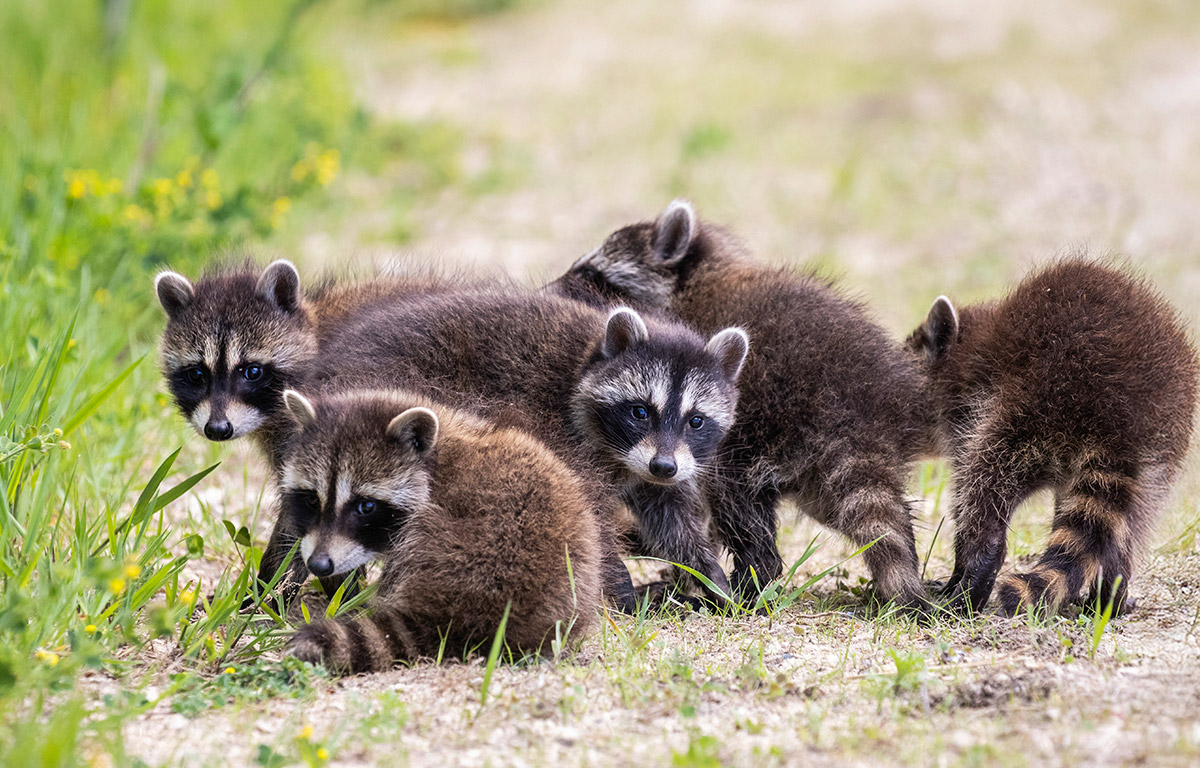
That long dependency period is the main reason raccoon baby season Ontario properties experience calls for weeks in a row rather than a single event, and it’s a major factor in how a removal should be handled.
What to Do If You Find an Orphaned Litter
If you find kits alone, wait and watch before assuming the mother is gone. Raccoon mothers often leave for hours at a time to feed and will move a litter if they feel it’s threatened. Avoid touching or moving the kits yourself. Ontario doesn’t allow keeping wildlife, even briefly, beyond a short window before transferring it to a licensed rehabilitator or professional. If a mother doesn’t return after 24 hours, contact Pestend or a wildlife rehabilitator rather than intervening directly.
Are There Raccoons in Your Attic? Warning Signs
To know if there are baby raccoons in your attic, rely on your hearing: chirping, chattering, or shuffling noises coming from the attic or soffit area, most noticeable at dusk and dawn when the mother comes and goes to feed, can be a pretty clear sign. Homeowners may also notice staining around a vent or roofline, torn insulation, or a strong, persistent odour.
Mississauga’s mix of older two-storey homes and newer builds means entry points vary. Loose roof vents, gaps around chimney flashing, and damaged soffits are common openings. If you suspect baby raccoons in your attic, avoid sealing the entry point right away. Sealing a den while kits are still inside can trap them, turning a noise complaint into a much bigger and more distressing problem.
Why Raccoon Removal During Breeding Season in Mississauga Requires Special Care
A raccoon removal handled in October, when a den is empty, is a fairly straightforward exclusion job. Raccoon removal during breeding season in Mississauga properties is different, because there’s a real chance a mother and litter are both present. Installing a one-way door too early, before kits are mobile, can separate a mother from young she can’t retrieve, which creates both a welfare problem and often a bigger nuisance as the mother tries to get back in.
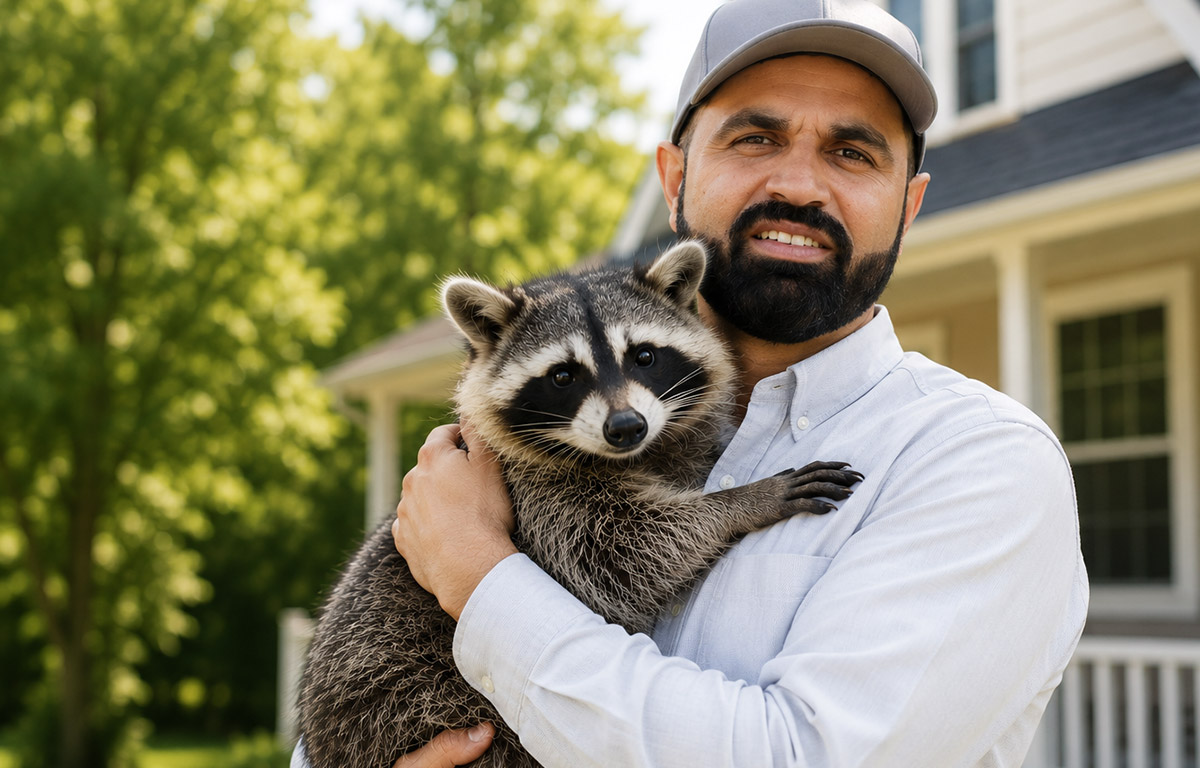
Ontario also restricts destroying the den of a furbearing mammal without approval, and municipalities require wildlife to be handled humanely rather than trapped or harassed more than necessary. In practice, that means a technician needs to confirm whether kits are present, how old they are, and whether the mother is still active in the den before recommending an exclusion method or timeline.
Pestend’s raccoon removal service in Mississauga inspects for exactly this before any entry points are sealed.
What Humane Raccoon Removal in Mississauga Looks Like
Humane raccoon removal Mississauga homeowners can expect, generally follows a few consistent stages, though the exact approach depends on the property and the season. A technician inspects the property to confirm raccoon activity and locate entry points such as vents, chimneys, and soffit gaps.
If kits are present, the technician checks their age and mobility before recommending next steps, since young that can’t yet leave the den need to reach that stage, or be safely reunited with their mother, before the den is closed.
Once the den is confirmed empty, entry points are sealed to prevent raccoons from getting back in, and the technician can advise on cleanup and repair needs left behind. Pestend uses humane wildlife-control methods whenever possible, with the specific approach determined by the species, season, and whether dependent young are involved.
For a property-specific plan, Pestend’s Mississauga wildlife removal team can inspect the den and outline an appropriate timeline. Qualifying wildlife services include a satisfaction guarantee; ask about current coverage when you request an estimate.
FAQs About Raccoon Breeding Season in Mississauga
Are raccoons more aggressive during mating season?
Male raccoons can range farther and behave more assertively toward other raccoons while searching for a mate, but this is typically directed at rivals rather than people or pets. A raccoon that seems bold or is active during the day may simply be a nursing mother foraging on a tighter schedule, not necessarily a sign of illness.
What does raccoon mating season sound like at night?
Raccoons communicate with a range of sounds during mating season, including chittering, screeching, and low growling, especially when more than one animal is present. A sudden increase in nighttime noise on the roof or in the yard during late winter is often the first sign that mating activity has started nearby.
Is it legal to remove a mother raccoon and her babies in Ontario?
Ontario allows property owners, or an agent acting on their behalf, to address wildlife that’s damaging or about to damage a property, but the animals must still be handled humanely and dens can’t be destroyed without approval. In practice, this means a mother and litter need a method that accounts for the kits’ age, rather than removal all at once.
What should I do if I find a baby raccoon alone?
Wait and observe from a distance first. Mothers often leave kits for several hours while foraging and will return. Avoid handling the animal, since Ontario doesn’t allow keeping wildlife beyond a brief transfer window. If 24 hours pass with no mother in sight, contact a licensed wildlife rehabilitator or a wildlife control company for guidance.
How long does raccoon baby season last in Ontario?
Raccoon baby season in Ontario run from around March through the summer, since litters can be born anywhere from early spring into June and kits stay dependent on their mother for several months afterward. That’s why raccoon-related calls tend to stay elevated for a longer stretch than a single spring weekend.
Need Help With Raccoons on Your Property?
If you’re hearing new activity in the attic or noticing more raccoons around your Mississauga property this spring, it’s worth having it looked at before assuming it will resolve on its own. Pestend’s raccoon removal service inspects the property, checks for dependent young, and recommends a removal and exclusion plan based on what’s actually happening in the den. Contact Pestend to schedule an inspection or ask about current availability for raccoon breeding season service calls.