Mouse infestations are a common problem for homeowners across the GTA, and one that tends to catch people off guard. Mice are nocturnal by nature, which means most of their activity happens while you’re asleep. They can settle into the walls, attic, or basement of a home and go undetected for weeks.
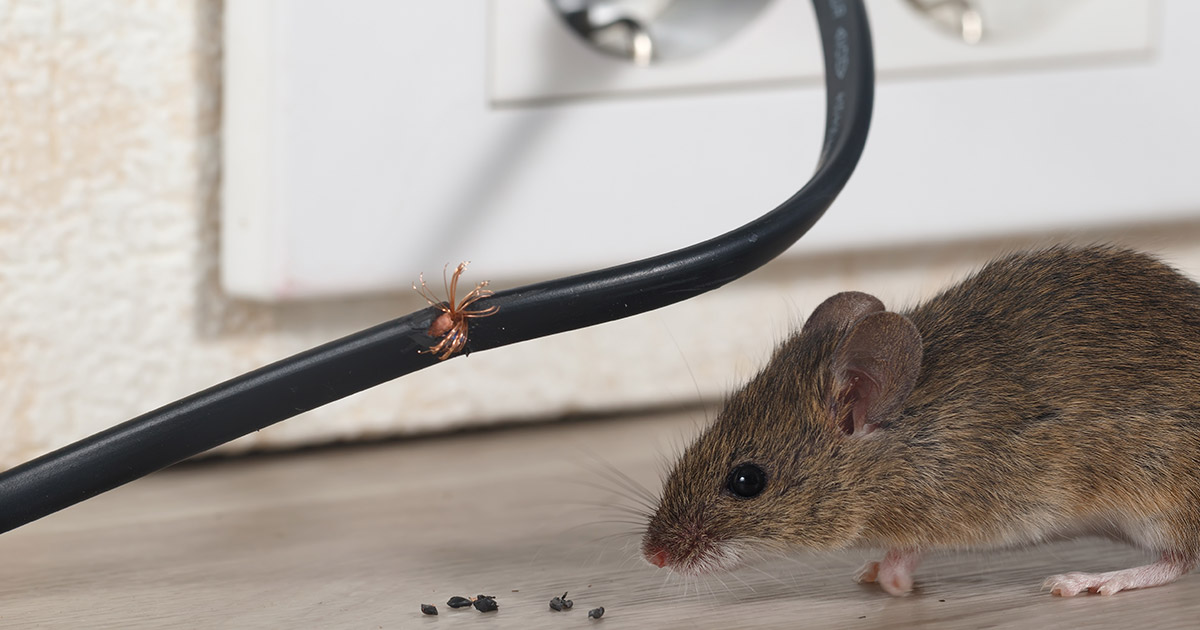
To prevent a mouse infestation from taking over your home, knowing how to tell if you have mice at the earliest stage makes all the difference.
Why Mississauga Homes Are Prone to Mouse Infestations
When the temperature drops in Mississauga, mice start looking for a way inside. It happens every fall, and residential homes are exactly what they’re looking for. Warm, accessible, and full of food sources, a typical home in this city checks every box.
Older neighbourhoods like Port Credit, Lakeview, and Cooksville are particularly vulnerable. Decades of settling, worn weatherstripping, and small gaps around foundations and utility pipes give mice plenty of ways in. It has nothing to do with how clean or well-kept a home is. A gap no bigger than a dime is enough for a mouse to squeeze through, and those gaps are more common than most people think.
Newer homes face different but similar risks. Construction gaps around vents, pipes, and utility entries are easy to miss and often go unaddressed for years. Mississauga’s geography adds to the problem. The city’s ravines, creek systems, and the trail network along Lake Ontario create natural corridors that bring mice through and into residential areas on a regular basis.
The most practical thing homeowners can do is get familiar with the signs of mice in the house so they can catch a problem early.
7 Mouse Infestation Signs You Should Not Ignore
Because mice are nocturnal and tend to remain in concealed areas of a home, infestations frequently go undetected until they are well established. Direct sightings are relatively rare in the early stages.
The seven signs outlined below reflect what pest control professionals look for during a property inspection and what every homeowner should be able to identify on their own.
1. Mouse Droppings
Finding droppings in your home is one of the more reliable ways to confirm a mouse infestation. Mouse droppings are small and rice-sized, dark brown to black, and pointed at both ends. They turn up most often along baseboards, inside cabinets, under sinks, and behind appliances.
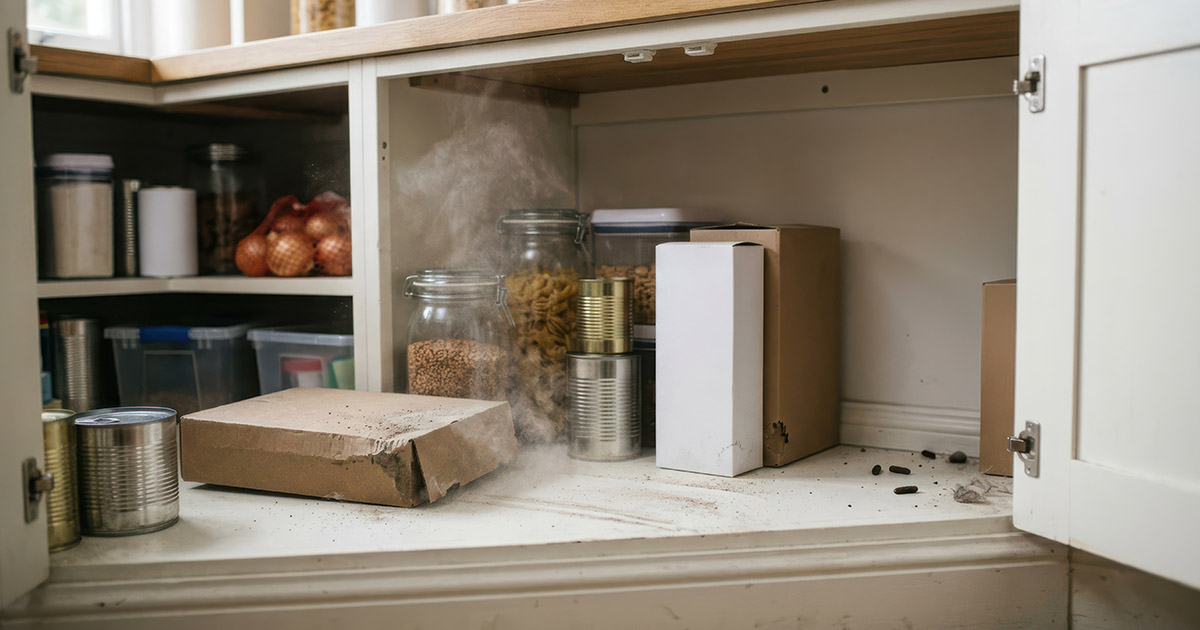
One useful detail for mouse droppings identification is that mice rarely stray far from their usual routes. Droppings collect in the same spots repeatedly, which often points directly to where the mice are most active.
Fresh droppings are dark and soft, a sign that mice are currently active nearby. Dried, grey droppings suggest the activity is older, though that alone is not confirmation that the mice are gone.
2. Scratching Noises in Walls at Night
If you are lying awake at night listening to something scratch steadily inside the wall beside you, that is not something to write off. Scratching noises in walls at night are a well-documented sign of mouse activity and one of the most common reasons homeowners first suspect they have a problem.
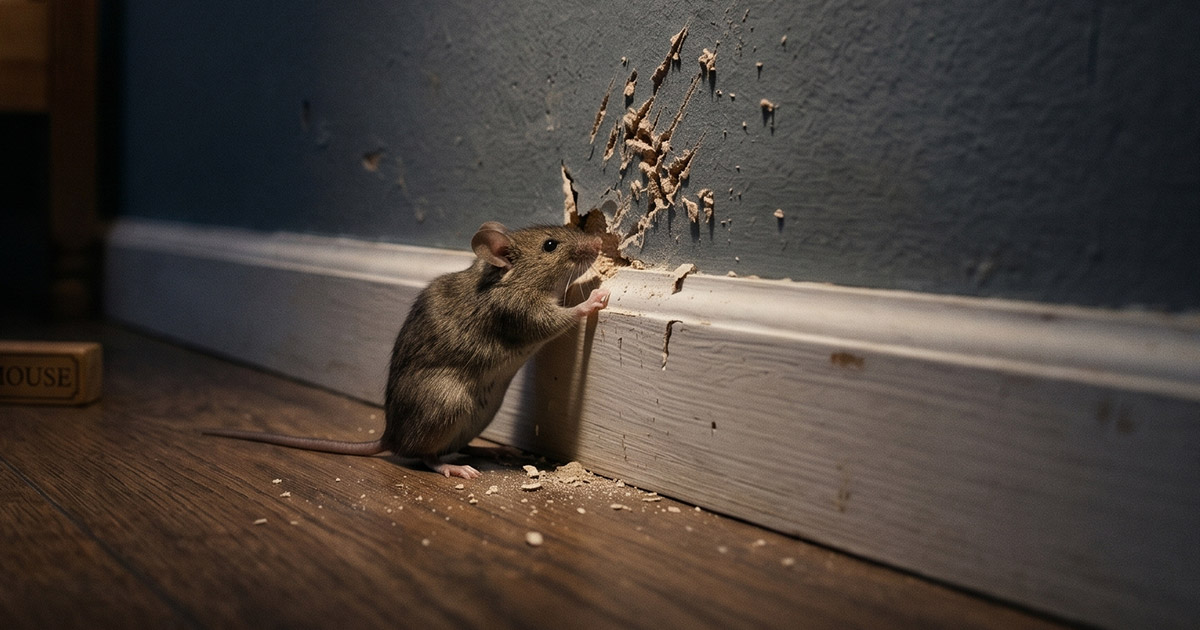
The location of the sound matters. Noise inside the walls points to mice travelling through wall cavities, while sounds from overhead usually indicate attic activity. Both are among the key mice in walls signs worth paying attention to, and each points to a different area of the home
If the sounds are moving around from night to night or popping up during daylight hours, you’re likely dealing with a widespread infestation that needs urgent attention.
3. Shredded Insulation and Nesting Materials in the Attic
The attic is one of the first places mice head when they get inside a home, and one of the last places homeowners think to check. It offers everything a mouse needs to establish a stable nest: warmth, darkness, minimal disturbance, and easy access to wall cavities that connect to the rest of the house.
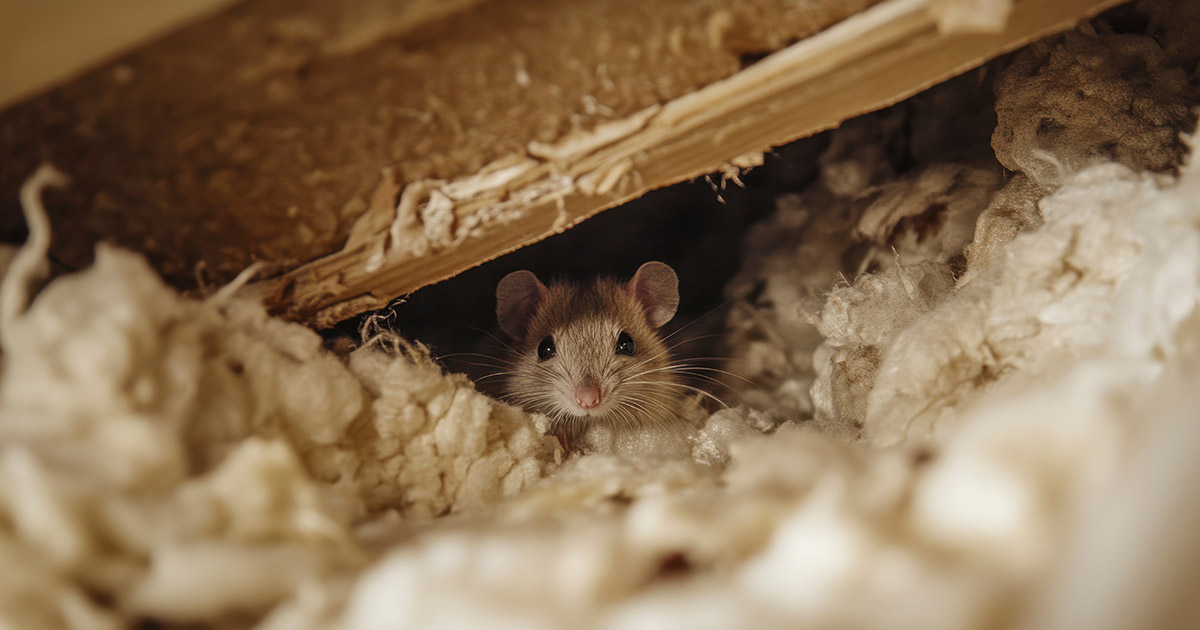
Among the most common mice in attic signs is damage to insulation. Mice shred through it to gather nesting material, leaving behind torn, displaced sections that no longer function the way they should. Fabric scraps, chewed cardboard, and compacted paper nests tucked into corners or along the edges of the attic floor are also typical findings.
4. Grease Marks and Smudge Trails Along Walls
Mice have very poor eyesight, so they navigate largely by touch and smell rather than sight. Staying close to walls as they move gives them a physical reference point, and they return to the same routes so consistently that the oils and dirt in their fur gradually build up on the surfaces they brush against.
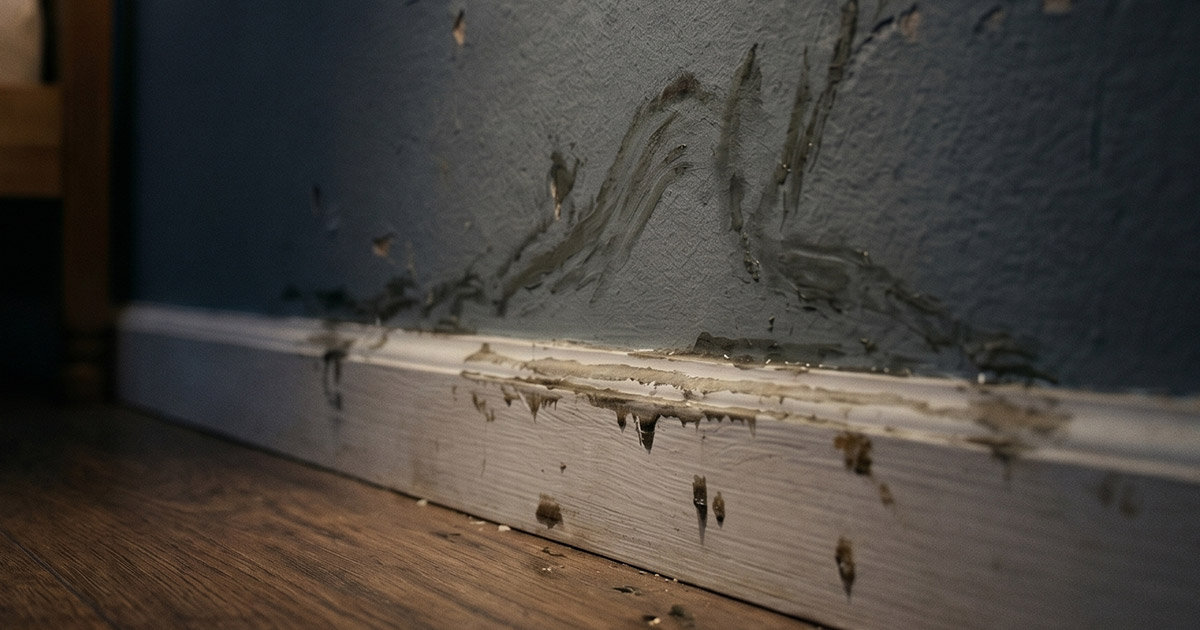
Over time, this leaves behind dark smudge marks along baseboards, around entry points, and in the spaces behind appliances. Because mice follow the same paths night after night, these marks tend to appear in lines rather than at random, which makes them a reliable guide to where activity is concentrated.
5. Gnaw Marks and Structural Damage
Mice gnaw constantly, and not out of hunger. Their teeth never stop growing, which means chewing is something they do out of necessity rather than choice. The damage this causes across a home can be surprisingly extensive.
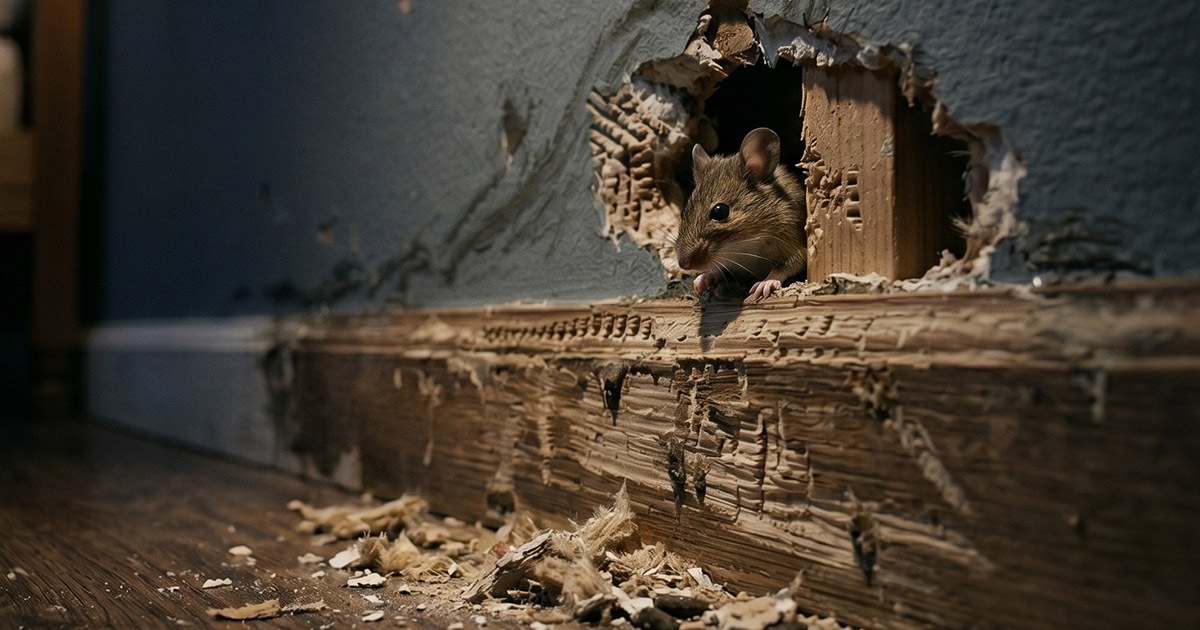
Chewed electrical wiring is among the most serious consequences, as frayed or exposed wires are a known cause of house fires. Beyond wiring, mice will work through wood, plastic, drywall, and food packaging without much discrimination. Holes along baseboards, damaged cabinet corners, and torn bags or boxes in the pantry are all consistent with this behaviour.
6. A Strong Ammonia-Like Odour in Enclosed Spaces
Mice urinate frequently as they move, using scent to mark the paths they travel through a home. Over time, that urine builds up along established routes and produces a sharp, ammonia-like smell that becomes harder to ignore as an infestation grows. It tends to be most noticeable in confined, poorly ventilated spaces: inside kitchen cupboards, behind the refrigerator or washing machine, beneath sinks, and in crawlspaces that rarely get opened.

If you have noticed an unexplained smell in one of these areas that does not go away regardless of how much you clean, you may be dealing with a mouse infestation.
7. Seeing a Live or Dead Mouse — A Sign of a Serious Infestation
A mouse sighting during the day is one of the more serious mouse infestation signs a homeowner can come across. Mice are nocturnal and avoid exposure by instinct. When one appears in an open area during daylight hours, it is being displaced by a population that has run out of room, not wandering by chance. One visible mouse almost always means significantly more are present and out of sight.

A dead mouse found in an open area is not reassuring news either. It typically points to an overcrowded colony where competition for nesting space is forcing weaker mice out into the open. At this stage, the infestation is active and established. A wait-and-see approach is unlikely to change that, and getting professional mouse control is the more sensible next step.
Got a Mouse Infestation in Your Home? Pestend Mississauga Has You Covered
Most homeowners who catch a mouse problem early do so because they knew what to look for before things got out of hand. The signs mice leave behind are consistent and follow predictable patterns, which makes them actionable when you understand what they mean.

If you suspect you have a mouse infestation in your home, let the experts at Pestend Pest Control Mississauga put your mind at ease. Our pest control technicians use effective and humane techniques to locate, treat, and eliminate mouse activity at every stage of an infestation. We address the problem at its source, identifying and sealing the entry points mice use to get in, so that once they are gone, they stay gone.
Request a free quote or schedule an inspection with Pestend Mississauga today and let us handle the rest.